Prostate Cancer

Renal Stones
April 2, 2021
Benign Prostatic Hyperplasia (BPH)
April 2, 2021Prostate Cancer
What Is Prostate Cancer?
There are million of cells in our body that renew themselves all the time. Occasionally these cells can grow and form benign growths called Tumours. Malignant growths or Cancers are when the cells invade and damage the surrounding tissues.
Cancer cells can break off and implant itself to other parts of our body. These are called secondaries or metastasis.
Prostate Cancer is the third most common male cancer in Malaysia. About 50% of men above the age of 50 will most likely have prostate cancer. Unfortunately, a lot of the cancers are detected at a late stage because of the lack of awareness, lack of diagnostic tools and possible poor health seeking behavior in men. If detected at an early stage, prostate cancer can be treated and cured. Speak to your urologist about getting screened.

Symptoms of Prostate Cancer
If you have the following symptoms, speak to your doctor about prostate cancer.
- Frequent urination.
- Weak or interrupted urine flow or the need to strain to empty the bladder.
- The urge to urinate frequently at night.
- Blood in the urine.
- New onset of erectile dysfunction.
- Pain or burning during urination, which is much less common.
- Discomfort or pain when sitting, caused by an enlarged prostate.
- Bone pain
Diagnosis of Prostate Cancer
Digital Rectal Examination: The doctor will need to examine the prostate by inserting a finger into the back passage. It is uncomfortable but not painful.
Prostate Specific Antigen (PSA): This is a blood test which is usually raised in prostate cancer. The doctor may also use this to see how effective your treatment is and to monitor if the cancer has come back.
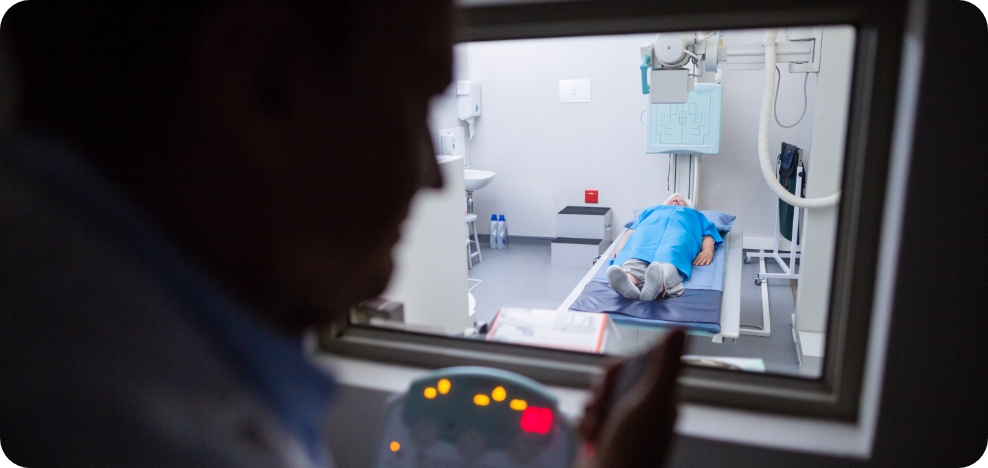
Multi-Parametric Magnetic Resonance Imaging (MRI Scan): MRI Scan involves looking at the prostate in detail. It involves lying flat in a large tunnel-like machine for approximately 45mins to 1 hour. You will be given noise cancelling headphones to dampen the noise from the machine.
MRI/Ultrasound Fusion Targeted Prostate Biopsy: Together with the MRI Images, the doctor will map out areas which are suspicious of cancer to ensure that core biopsies are taken from this area. Biopsies are done by inserting a needle through the skin into the prostate i.e. Transperineal Biopsy. This procedure is done under anaesthesia.
If the doctor suspects that the cancer has spread elsewhere, we may organize further scans:
Bone Scan: This scan involves a small amount of radioactive dye that is injected into your bloodstream. The x-ray is then able to detect if there are any areas which are damaged by the bones.
PET-CT Scan: This scan is like the bone scan where a small amount of radioactive substance is injected into the body. Areas where cancer cells are concentrated may be detected on this scan.
With the above information, the doctor is able to tell if you do have a low of high suspicion of cancer, if the cancer is of low or high grade and lastly, whether or not it has spread elsewhere.
Stages of Prostate Cancer
Based on the Gleason score, prostate cancers are often divided into 3 groups:
- Cancers with a Gleason score of 6 or less may be called well differentiated or low-grade.
- Cancers with a Gleason score of 7 may be called moderately differentiated or intermediate- grade.
- Cancers with Gleason scores of 8 to 10 may be called poorly differentiated or high-grade.
Cancers are also further classified into:
- Early: Confined to the prostate
- Late: The cancer may have spread to adjacent organs but not the lymph nodes.
- Advanced: The cancer may have spread to the lymph nodes, bones, lungs, and brain.
Treatment of Metastatic Prostate Cancer
The treatment is dependent on the stage, grade of the disease as well as patient preference.
- Surgery – Robotic or Laparoscopic Prostatectomy
- Radiotherapy
- Injections – Hormone Therapy
- Proton Beam Therapy